If you have ever driven through Grosse Pointe Farms and felt like every block tells a slightly different story, you are not imagining it. The city’s homes reflect a rich mix of early 20th-century styles, from formal Colonials to storybook Tudors and practical Arts and Crafts houses. If you are buying, selling, or simply trying to understand what gives this market its charm, knowing the architecture can help you read a home more clearly. Let’s dive in.
Why Grosse Pointe Farms Feels So Distinctive
Grosse Pointe Farms developed quickly in the late 1910s and early 1920s, when the automobile helped push growth inland. According to the Grosse Pointe Historical Society’s Farms Survey, new roads brought tradesmen, estate workers, village employees, businessmen, and professionals into the area.
That growth created a housing mix rather than a single look. The survey identifies English Tudor, French Renaissance, Italianate, Georgian, Colonial, and Arts and Crafts homes as part of the city’s character. Today, that variety is still one of the clearest things you notice when you move through the Farms.
The city also treats architectural character as something worth protecting. The 2023 Annual Planning Report says the adopted master plan calls for preserving architectural character, especially within the housing stock. In other words, style is not just part of the past here. It is part of how the community plans for the future.
Colonial and Georgian Revival Homes
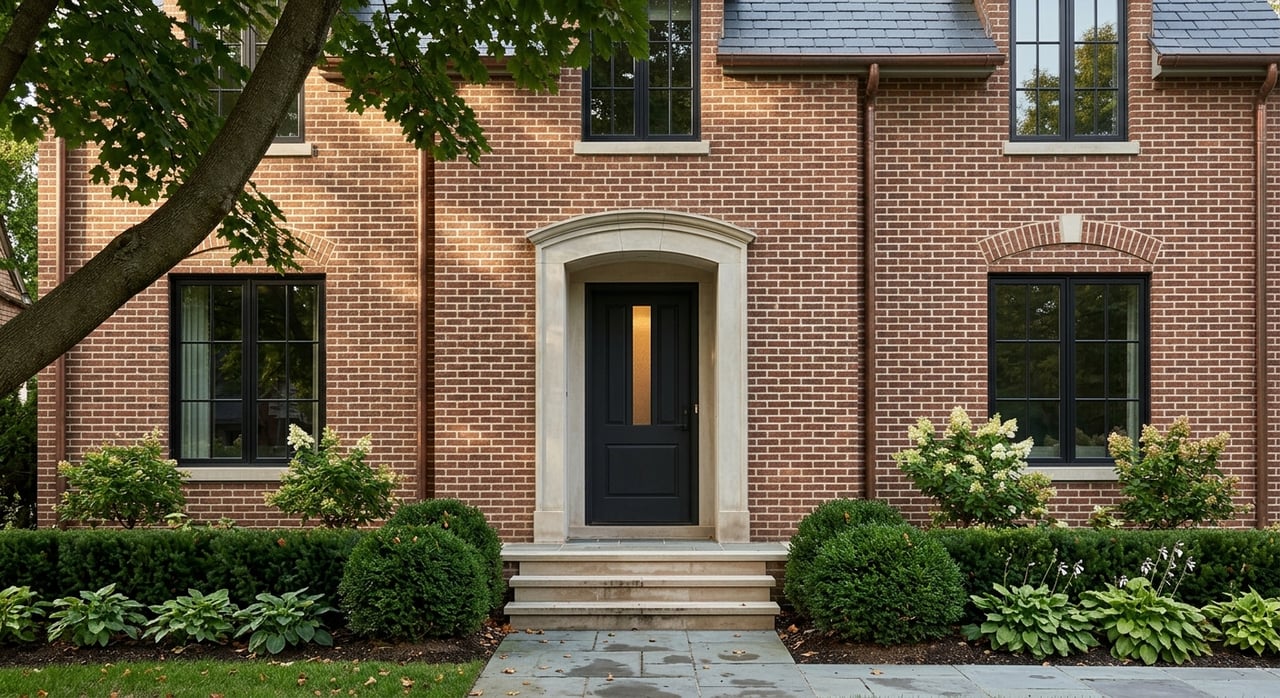
Colonial Revival and Georgian Revival homes are some of the most recognizable styles in Grosse Pointe Farms. These homes draw from late 18th- and early 19th-century American design traditions, with a strong focus on symmetry, classical details, and orderly facades.
The National Park Service describes Colonial Revival homes as often featuring balanced front elevations, columns or pilasters, fanlights or sidelights, Palladian windows, and prominent porches or porticos. In practical terms, that usually gives you a home that feels formal, composed, and easy to read from the street.
The Grosse Pointe Historical Society notes that many residences designed by Robert O. Derrick in the Pointes were Colonial Revival or Georgian Revival. That helps explain why this style feels so at home in the local streetscape.
What buyers often notice
If you are touring this style, you may notice a sense of order right away. The symmetry outside often suggests a floor plan that feels structured and traditional inside. That can appeal to buyers who want classic curb appeal and rooms with clearly defined purposes.
What sellers should know
If you own a Colonial or Georgian Revival home, its visual balance is often one of its strongest selling points. Buyers tend to respond well to homes that feel timeless and well proportioned, especially in a market where architectural identity matters.
French-Inspired Homes in the Farms
French-inspired homes are another important part of Grosse Pointe Farms architecture. The Farms Survey includes French Renaissance among the defining styles seen during the city’s early 20th-century growth.
The National Park Service describes French Eclectic design as drawing from French domestic architecture, often with steeply pitched hipped roofs, asymmetrical forms, gables, towers, stucco or stone walls, and overhanging second stories. In Grosse Pointe Farms, these details often create a formal, estate-like appearance.
These homes tend to stand out because they feel layered and expressive. Rooflines, masonry, and window proportions all work together to create the look, which is part of why they leave such a strong impression from the street.
Why this style feels special
French-inspired homes often deliver a sense of elegance that is hard to copy. They can feel substantial and highly detailed, with an exterior that gives the home much of its personality.
Renovation considerations
If you are buying a French-inspired home with plans to renovate, it helps to look closely at the exterior details. Because roof geometry, masonry, and window proportions are central to the style, major changes usually work best when they are thoughtfully matched to the original design.
Tudor Revival Homes
Tudor Revival is one of the signature looks in Grosse Pointe Farms. The Farms Survey specifically names English Tudor as a defining local style, and it remains one of the most memorable architectural types in the area.
The National Park Service describes Tudor Revival homes as featuring half-timbering, decorative brickwork, leaded casement windows, large chimneys, dormers, second-floor overhangs, and steeply pitched gable roofs. These are the homes that often feel dramatic, textured, and full of personality.
A useful local example is 111 Cloverly Road. The Grosse Pointe Historical Society identifies it as English Tudor, notes its elongated narrow wings and abundant windows, and documents extensive renovations completed in 2007.
What gives Tudor homes their appeal
Tudor homes often offer standout curb appeal and a cozy, room-by-room feel inside. If you love homes with strong character, this style can be especially compelling.
What to weigh before updating
The same details that make Tudor homes beautiful can also make exterior work more complex. Rooflines, brick patterns, and window layouts are a big part of the home’s identity, so updates usually require a careful design approach.
Arts and Crafts and Modest Brick Homes
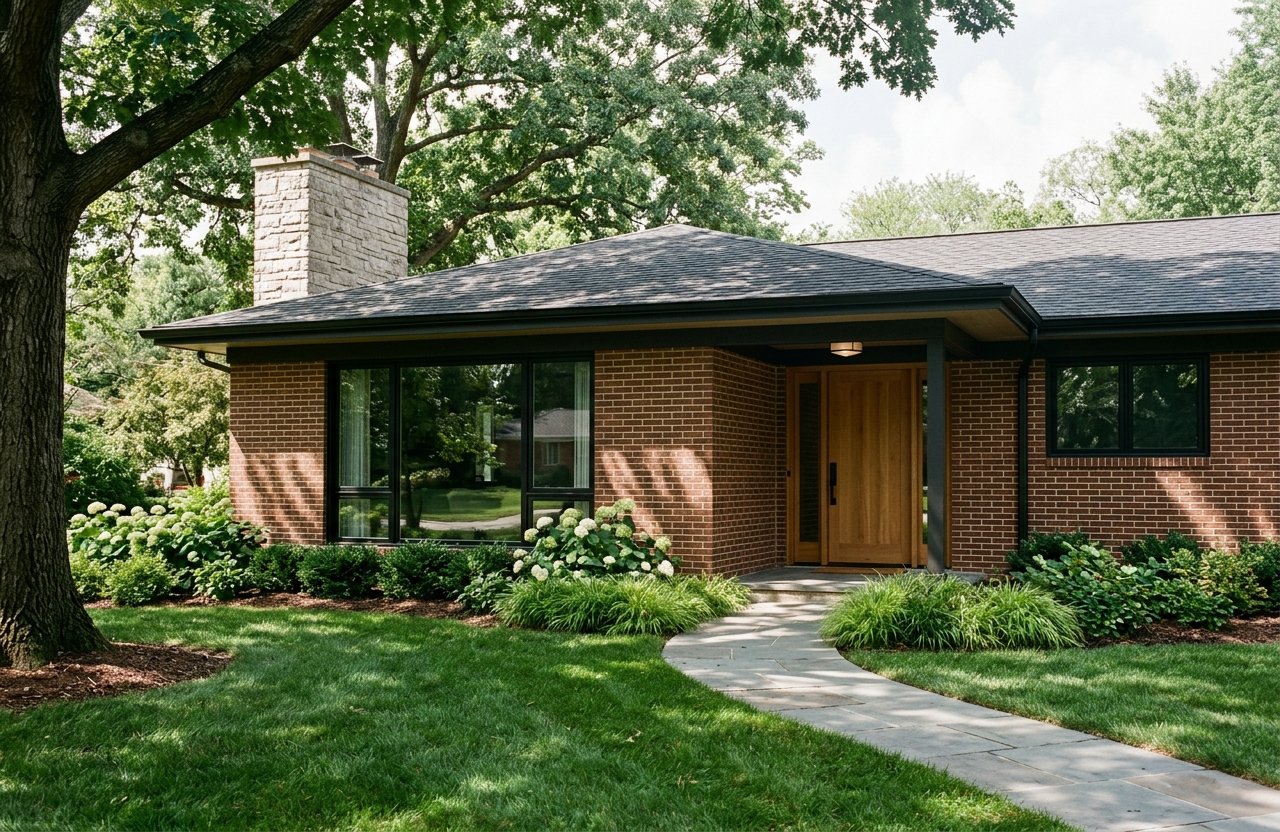
Not every defining home in Grosse Pointe Farms is grand or highly formal. The Farms Survey also includes Arts and Crafts homes, and this category helps explain the practical, modest brick homes found on many inland streets.
The National Park Service describes Craftsman homes as generally one-and-a-half or two stories with low-pitched roofs, wide eaves, exposed rafter tails or brackets, integrated front porches, and open floor plans. These homes often use natural materials such as shingles, brick, stone, and river rock.
Simple bungalow forms were also built to be small to moderately sized and economically accessible. That practical side still shows up today in homes that prioritize durability, comfort, and easier upkeep over heavy ornament.
Why buyers are drawn to them
If you want charm without an overly formal feel, this category can be especially appealing. These homes often feel approachable and livable, with layouts and forms that are easier to adapt over time.
Why they can be renovation-friendly
Compared with more elaborate revival styles, Arts and Crafts and modest brick homes usually have simpler footprints and less complicated detailing. That often makes them more straightforward to modernize while still keeping their original character intact.
How Style Shapes the Living Experience
Architecture is not just about appearance. In Grosse Pointe Farms, style can also shape how a home feels, functions, and evolves.
Colonial Revival and Georgian homes often feel the most formal and easiest to expand discreetly because their symmetry creates a clear organizing structure. French and Tudor homes often feel more picturesque and layered, but also more specialized in how they present themselves. Craftsman and modest brick homes are usually the most straightforward to rework because their forms tend to be simpler.
These are not hard rules, but they are useful ways to think about the buyer experience. When you understand the style, you can often better predict what the home may offer in terms of layout, curb appeal, and renovation potential.
Local Landmarks That Add Context
A few local references help tell the larger story of architecture in Grosse Pointe Farms. One is the Beverly Road Historic District, located at 23 to 45 Beverly Road. It is listed on the National Register and includes 15 residential buildings from the early and mid-20th century.
This district serves as a helpful visual shorthand for the revival-era character found throughout the city. If you want to understand the kind of architecture that defines many Farms streets, Beverly Road offers a useful point of reference.
For a much earlier chapter of local history, the Provencal-Weir House provides a striking contrast. The Grosse Pointe Historical Society identifies it as a c.1823 Greek Revival ribbon-farm house and the oldest surviving residence in the Pointes.
That contrast matters because it shows just how much of the city’s current identity was shaped later, during the subdivision-era building boom. The homes most buyers recognize today came after that earlier rural period.
Why Architectural Knowledge Matters in This Market
In a place like Grosse Pointe Farms, architecture is more than background scenery. It influences first impressions, renovation decisions, and how buyers connect emotionally to a home.
If you are buying, understanding style can help you separate cosmetic issues from true architectural features worth preserving. If you are selling, it can help you present your home in a way that highlights what makes it distinctive in the local market.
That is especially true in a community where preservation of architectural character remains a planning priority. When you can clearly identify what a home is and what buyers are likely to value about it, you make more informed decisions from the start.
Whether you are drawn to a stately Colonial, a dramatic Tudor, a refined French-inspired home, or a practical brick bungalow, Grosse Pointe Farms offers a level of architectural variety that makes the search more interesting and the right fit more personal.
If you want help understanding how a home’s architecture affects value, presentation, or renovation potential in Grosse Pointe Farms, Megan Ford can help you navigate the details with clear, local guidance.
FAQs
What architectural styles are common in Grosse Pointe Farms homes?
- Grosse Pointe Farms is known for a mix of Colonial Revival, Georgian Revival, French-inspired homes, Tudor Revival, and Arts and Crafts houses, along with more modest brick homes that developed during the early 20th century.
Why do Grosse Pointe Farms homes have so much architectural variety?
- The city’s housing stock expanded quickly in the late 1910s and early 1920s, and the growth brought a wide range of residents and home styles rather than a single uniform design pattern.
What makes Tudor Revival homes in Grosse Pointe Farms stand out?
- Tudor Revival homes often feature steep gable roofs, decorative brickwork, leaded windows, large chimneys, and other details that create strong curb appeal and a distinctive historic look.
What should buyers know about French-inspired homes in Grosse Pointe Farms?
- French-inspired homes often have steep roofs, asymmetrical forms, and masonry-heavy exteriors, which can create a formal look but may also require thoughtful planning if you want to make major exterior changes.
Are Arts and Crafts homes in Grosse Pointe Farms easier to renovate?
- In many cases, yes. Their simpler footprints and less elaborate detailing can make them more straightforward to update than highly decorative revival-style homes.
Why does architecture matter when buying or selling in Grosse Pointe Farms?
- Architecture can affect curb appeal, interior flow, renovation potential, and how buyers respond to a home, so understanding a property’s style can help you make better decisions in this market.